An LLC grants you legal authority to purchase products at wholesale prices from distributors and manufacturers. Most suppliers require business documentation primarily an EIN and resale certificate to verify your legitimacy before extending wholesale pricing. Your LLC structure separates business transactions from personal finances, which protects your assets and streamlines tax reporting when buying inventory in bulk.
Over 78% of wholesale suppliers require formal business registration before approving accounts, according to the National Association of Wholesaler-Distributors. This requirement protects suppliers from tax liability and ensures buyers intend to resell products rather than consume them personally. Your LLC meets this threshold automatically once you complete basic registration steps.
This guide walks through every document you need, how to find verified suppliers, and which mistakes drain your budget. You’ll discover state-specific requirements, tax exemption strategies, and practical steps to start ordering wholesale immediately after forming your LLC.
What Documents Does Your LLC Need for Wholesale Purchasing?
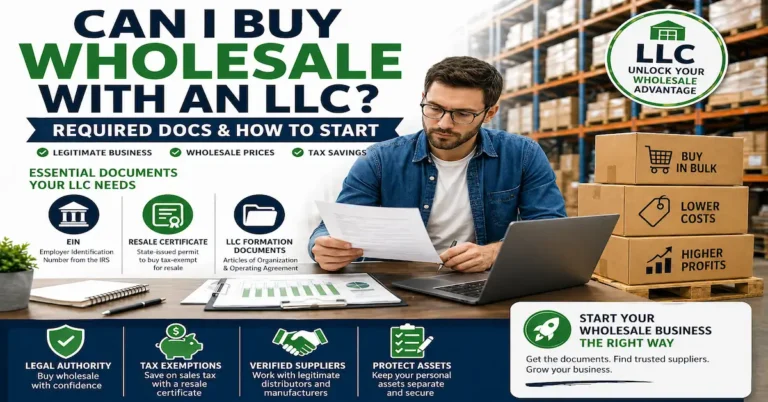
Your LLC requires three core documents to open wholesale accounts: an Employer Identification Number (EIN) from the IRS, a state-issued resale certificate, and your LLC formation documents. Suppliers verify these before granting access to wholesale pricing and net payment terms.
The EIN functions as your business tax ID. Apply free through the IRS website the process takes under 10 minutes and provides instant approval for most applicants. Wholesalers use this nine-digit number to report transactions and confirm your business exists in federal records.
A resale certificate (also called a seller’s permit or sales tax license) proves you plan to resell products rather than use them personally. This document exempts you from paying sales tax on wholesale purchases. Application processes vary by state some issue certificates within 24 hours while others take two weeks. California’s BOE and Texas Comptroller websites offer streamlined online applications.
Your LLC Articles of Organization serve as proof of business formation. Keep certified copies accessible because suppliers often request them during account setup. Some distributors also want a copy of your operating agreement to verify member signatures match authorization documents.
Pro Tip: Create a digital compliance folder with PDFs of your EIN letter, resale certificate, and LLC formation docs. This lets you respond instantly when suppliers request documentation.
How to Obtain Your Federal EIN
Visit IRS.gov and navigate to the EIN Assistant tool. Select “Limited Liability Company” as your entity type and answer questions about your business structure. The system generates your EIN immediately upon completion no waiting period required for domestic LLCs.
Print your EIN confirmation letter right away. The IRS sends a physical copy by mail, but that takes three weeks. Your digital confirmation carries the same legal weight for opening bank accounts and supplier applications.
State Resale Certificate Requirements
Each state operates different systems for issuing resale certificates. Most require your EIN, business address, and estimated monthly sales volume. States like New York and Florida issue certificates instantly online. Others like Pennsylvania mail physical certificates after processing applications.
Some states call this document a “sales tax permit” or “tax exemption certificate”—the terminology changes but the function remains identical. Always check your specific state’s Department of Revenue website for current requirements and processing times.
Where Can LLC Owners Find Legitimate Wholesale Suppliers?
Legitimate wholesale sources include manufacturer direct programs, verified distributor networks, and industry-specific trade platforms. The key is confirming suppliers require business documentation if they sell to anyone without verification, they’re likely operating as retailers with marked-up “wholesale” pricing.
Start with wholesale distributors usa directories that pre-verify supplier credentials and business requirements. These platforms save weeks of research by connecting you directly with distributors who work exclusively with registered businesses. Look for suppliers who ask for your resale certificate during signup this confirms authentic wholesale operations.
Trade shows provide direct manufacturer access. Events like ASD Market Week and ECRM sessions let you negotiate terms face-to-face and compare multiple suppliers in one location. Bring business cards, your EIN, and resale certificate to these events. Manufacturers often extend better pricing to buyers who demonstrate preparation and purchasing intent.
Industry associations maintain supplier directories for members. The National Retail Federation and sector-specific groups like the Automotive Aftermarket Suppliers Association publish vetted supplier lists. Membership fees typically range from $200 to $500 annually but grant access to suppliers who don’t advertise publicly.
| Supplier Source | Verification Level | Typical MOQ | Best For |
| Manufacturer Direct | Highest | $5,000-$25,000 | Established businesses |
| Regional Distributors | High | $500-$2,000 | New LLCs |
| Trade Platforms | Medium | $200-$1,000 | Testing products |
| Dropship Networks | Low-Medium | No minimum | Low-volume testing |
Red Flags That Identify Fake Wholesalers
Avoid suppliers who charge membership fees just to view products. Real wholesalers earn profits from product sales, not directory access fees. Also skip any supplier selling to consumers and businesses through the same portal legitimate operations separate retail and wholesale channels completely.
Check if the supplier lists retail prices alongside “wholesale” prices. This tactic inflates the retail number to make wholesale pricing appear discounted. Authentic wholesalers quote only wholesale rates because they don’t serve end consumers.
How Does LLC Taxation Work for Wholesale Purchases?
Your LLC avoids paying sales tax on wholesale inventory purchased for resale when you provide a valid resale certificate. This exemption applies only to products you intend to sell. Supplies and equipment used in your business operations remain taxable in most states.
Pass-through taxation means your LLC’s profits flow directly to your personal tax return. You report wholesale purchases as cost of goods sold (COGS), which reduces taxable income. If you buy $10,000 in inventory and sell it for $18,000, you only pay taxes on the $8,000 profit margin.
Some LLCs elect S-corp taxation to reduce self-employment taxes on profits exceeding $60,000 annually. This strategy requires paying yourself a reasonable salary and distributing remaining profits as dividends, which avoid the 15.3% self-employment tax. Consult a CPA to determine if this election makes sense for your wholesale volume.
Multi-state operations trigger nexus requirements—you must collect and remit sales tax in states where you maintain inventory or exceed economic thresholds (typically $100,000 in annual sales). Services like TaxJar and Avalara automate compliance by tracking sales across jurisdictions and filing returns automatically.
Pro Tip: Track your resale certificate expirations in a calendar app. Most states require renewal every 2-4 years, and an expired certificate forces you to pay sales tax on wholesale orders until you renew.
Documenting Tax-Exempt Purchases
Maintain a transaction log showing which products were purchased tax-exempt under your resale certificate. Include the supplier name, invoice number, product description, and purchase date. States audit this documentation during compliance reviews to verify you didn’t abuse the tax exemption by consuming products personally.
What Are Common LLC Wholesale Buying Mistakes?
New LLC owners frequently mix personal and business purchases on the same accounts. This creates accounting nightmares during tax season and threatens your liability protection. Open dedicated business credit cards and bank accounts before placing your first wholesale order.
Another mistake is ordering maximum quantities to hit volume discounts without analyzing storage costs and cash flow impact. A 15% discount loses value when you’re paying $400 monthly for extra warehouse space or tying up capital that could purchase faster-moving inventory.
Many LLC owners neglect to verify supplier references before committing to large orders. Always request contact information for three current customers and actually call them. Ask about delivery reliability, product quality consistency, and how the supplier handles defective merchandise returns.
Skipping written contracts for net payment terms causes disputes later. Get everything in writing payment schedules, return policies, defect procedures, and minimum order requirements. Verbal agreements disappear when problems arise, leaving you without recourse for damaged shipments or billing errors.
Managing Cash Flow With Wholesale Orders
Calculate your inventory turnover rate before committing to bulk purchases. Divide your annual cost of goods sold by average inventory value aim for a ratio above 4 to ensure products move quickly enough to fund reorders. Lower ratios indicate you’re tying up cash in slow-moving stock.
Which Industries Offer the Best Wholesale Opportunities for LLCs?
The automotive wholesale parts sector provides consistent demand because vehicles require ongoing maintenance. Profit margins on parts and accessories range from 30-50%, with suppliers offering net-30 payment terms once you establish payment history. This industry rewards LLCs that specialize in specific vehicle makes or part categories rather than trying to stock everything.
Fashion and wholesale clothing suppliers usa networks generate high margins but require trend awareness and seasonal planning. Successful clothing LLCs identify niches like sustainable fabrics or plus-size activewear rather than competing in oversaturated general apparel markets. Minimum orders typically start at $500 for domestic suppliers and $2,000 for international manufacturers.
Electronics accessories maintain steady demand with lower competition than core devices. Phone cases, charging cables, and smart home accessories turn over quickly with 40-60% margins. Suppliers often dropship these items, eliminating storage costs for new LLCs testing market demand.
Health and beauty products offer consumable inventory that generates repeat orders. Customers reorder skincare, supplements, and cosmetics monthly, creating predictable revenue. Look for suppliers who provide private labeling options this lets your LLC build brand equity instead of competing solely on price.
Evaluating Product Profitability
Calculate landed cost before committing to a product line. Add the wholesale price, shipping, customs duties, and storage costs, then divide by your target selling price. Products with landed costs below 35% of retail price provide enough margin to cover marketing, returns, and payment processing fees while maintaining profitability.
How Do State Laws Affect LLC Wholesale Operations?
States impose varying requirements on wholesale business operations beyond basic LLC formation. California requires a seller’s permit for any business reselling tangible goods, while Delaware has no such state-level requirement for out-of-state sales. Research your home state’s specific regulations through the Secretary of State and Department of Revenue websites.
Some states mandate wholesale licenses for specific product categories. Florida requires separate licenses for selling wholesale pharmaceuticals, medical devices, and prescription drugs. Food wholesalers face FDA registration requirements plus state health department permits. Alcohol wholesale demands federal TTB permits plus state liquor authority licenses.
Interstate commerce introduces complexity. If you buy from suppliers in one state and sell to customers in another, you need to track economic nexus thresholds in each destination state. The 2018 Wayfair decision lets states require sales tax collection from out-of-state sellers exceeding minimum sales thresholds typically $100,000 in annual revenue or 200 transactions.
Business privilege taxes apply in some states based on gross receipts rather than net income. Texas imposes a franchise tax on LLCs generating over $1.23 million in annual revenue. Factor these additional taxes into your pricing strategy when expanding into new states.
Multi-State Registration Strategies
Consider forming your LLC in your home state regardless of “business-friendly” state reputations. Delaware and Nevada offer asset protection benefits, but you’ll still pay foreign qualification fees and registered agent costs to operate in your actual location. Most small wholesale LLCs save money by registering locally.
Frequently Asked Questions
Do I need an LLC to buy wholesale?
You don’t legally require an LLC to access wholesale pricing. However, most reputable suppliers refuse to work with unregistered sole proprietors because of tax reporting requirements and liability concerns. An LLC, corporation, or partnership provides the formal business structure suppliers expect.
How long after forming an LLC can I start buying wholesale?
You can begin purchasing wholesale within 1-2 weeks of LLC formation. The EIN approval is instant, but your resale certificate may take 3-14 days depending on your state. Some suppliers also require 30-90 days of business history before extending net payment terms.
What credit score do I need for wholesale accounts?
Wholesale suppliers typically check business credit through Dun & Bradstreet rather than personal credit scores. New LLCs without established business credit must usually prepay orders or use personal guarantees. Building a DUNS number and Paydex score takes 6-12 months of reported payment history.
Can my LLC buy wholesale from international suppliers?
Yes, but you’ll need to handle customs documentation and import duties. Your resale certificate doesn’t exempt import taxes only the sales tax your state would charge. Work with a customs broker for shipments exceeding $2,500 or containing regulated products.
Does my LLC need insurance to buy wholesale?
General liability insurance isn’t legally required for wholesale purchasing, but many suppliers mandate it before shipping goods. Policies typically start at $400 annually for $1 million coverage. Product liability insurance becomes critical if you’re reselling items that could cause injury.
Can I use my LLC to buy wholesale and sell retail?
Absolutely. This is the standard business model for most retail operations. Your resale certificate exempts wholesale purchases from sales tax, then you collect sales tax from end customers. Your LLC structure handles both sides of this transaction legally.
What happens if I use my resale certificate for personal purchases?
Misusing a resale certificate for personal purchases is tax fraud. States audit resale certificates regularly and impose penalties ranging from certificate revocation to criminal charges for intentional abuse. Always pay sales tax on items you consume personally, even if purchased from wholesale suppliers.
How do I find minimum order quantities before contacting suppliers?
Most wholesale directories list MOQs in supplier profiles. If not disclosed, email suppliers directly asking for their minimum order requirements by product category. Expect higher minimums for custom manufacturing and lower minimums for dropshipping arrangements.