Wholesaling is a business strategy where you contract a property or product from a seller and assign that contract to an end buyer for a profit. According to the National Association of Realtors, about 5-10% of real estate transactions involve wholesale assignments, but many new wholesalers fail within their first year due to preventable risks.
Understanding these risks isn’t just about avoiding failure. It’s about building a sustainable business whether you’re flipping contracts or working with wholesale suppliers in product distribution. You’ll learn the six major risks wholesalers face and how to navigate each one.
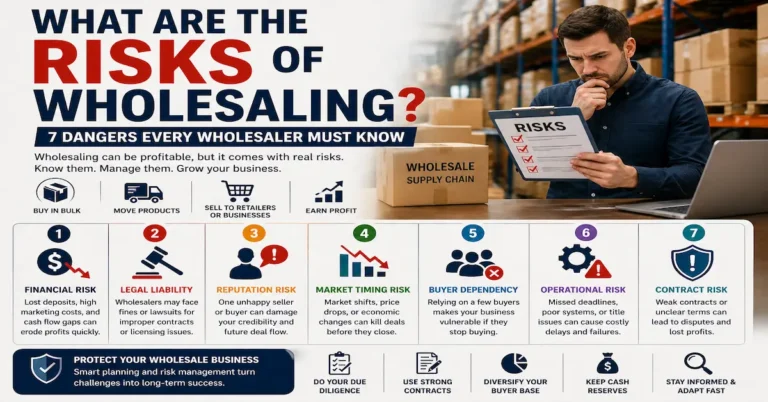
What Financial Risks Do Wholesalers Face?
Wholesalers face significant financial exposure including earnest money deposits, marketing costs, and potential legal fees if deals collapse. Most wholesalers lose $500-$2,000 per failed deal when contracts fall through or buyers back out unexpectedly.
The biggest financial trap is overcommitting on earnest money deposits. When you put down $1,000-$5,000 to secure a property contract, that money is at risk if you can’t find a buyer. Marketing expenses add up fast too. Direct mail campaigns cost $0.50-$1.00 per piece, and most wholesalers need 1,000+ mailings monthly to generate leads.
Cash flow problems hit hard when you’re waiting 30-60 days between deals. You’re still paying for advertising, software subscriptions, and possibly assistants while earning nothing. That gap destroys more wholesaling businesses than bad deals ever will.
Pro Tip: Keep three months of operating expenses in reserve before your first deal. This buffer lets you survive the inevitable dry spells between contracts.
How Does Legal Liability Threaten Wholesale Operations?
Wholesalers operate in a legal gray area that varies by state, creating exposure to accusations of practicing real estate without a license. In states like Illinois and Oklahoma, wholesalers have faced criminal charges and civil penalties exceeding $25,000 for improper assignment practices.
The core issue is equitable interest. When you sign a purchase agreement, you must have genuine intent to purchase the property, not just flip the contract. If prosecutors or real estate boards determine you’re acting as an unlicensed agent, penalties include fines, injunctions, and potential jail time in extreme cases.
Contract language matters enormously. Phrases like “and/or assigns” protect your ability to assign contracts, but they don’t shield you from licensing accusations if your business model is purely assignment-based without ever closing deals yourself.
State-Specific Regulations
| State | Wholesaling Status | Key Requirement |
| Illinois | Heavily Regulated | Must have license or close deals |
| Texas | Moderate | Clear contract language required |
| Florida | Permissive | Standard assignment practices allowed |
| Oklahoma | Restricted | Recent crackdowns on assignments |
What Reputation Risks Should Wholesalers Consider?
Your reputation determines deal flow more than any marketing campaign. One burned seller or frustrated buyer can poison your local market through online reviews and investor network gossip within days.
Sellers who feel misled about your intentions rarely stay quiet. When they discover you’re making $10,000-$20,000 by immediately flipping their contract, some feel cheated even though the transaction was legal. That resentment spreads through neighborhood Facebook groups and community boards.
Buyers face different disappointment. Cash buyers and rehabbers expect accurate property assessments. If your repair estimates are off by $15,000 or you misrepresent property condition, those buyers will never work with you again and will warn others.
Why Do Market Timing Risks Impact Wholesalers Severely?
Wholesalers have zero buffer against market shifts because contracts typically span just 30-45 days. A sudden interest-rate increase or a local economic downturn can evaporate your buyer pool overnight before you can adjust your strategy.
Real estate wholesaling is especially vulnerable during transitional markets. When interest rates jumped 3% in 2022, thousands of wholesalers couldn’t close deals because their cash buyers suddenly had better opportunities elsewhere. Properties under contract at $150,000 were suddenly worth $130,000, leaving wholesalers stuck with non-assignable contracts.
Product wholesalers working with american wholesale clothing suppliers face parallel issues. Fashion trends shift rapidly, and inventory ordered in March may be unsellable by June if consumer preferences change or competitors flood the market with similar products.
How Does Buyer Dependency Create Wholesale Vulnerability?
Most wholesalers rely on a core group of 5-10 active buyers who purchase 80% of their deals. When even two of those buyers leave the market, exit the business, or shift to different property types, your entire operation can stall for months.
Buyer relationships are inherently unstable. Cash investors chase returns, and they’ll abandon your market instantly if better opportunities appear elsewhere. That investor who bought your last five deals might suddenly be buying foreclosures in another state, leaving you without your most reliable exit strategy.
Building a large buyer list doesn’t solve the problem as much as beginners think. You might have 200 names on your email list, but only 8-12 are actually ready to close deals immediately. The rest are tire-kickers, researchers, or investors waiting for perfect opportunities that rarely materialize.
What Operational Risks Threaten Wholesaling Success?
Poor systems destroy wholesale businesses faster than lack of deals. When you’re managing multiple contracts simultaneously, missed deadlines, forgotten inspection periods, and communication gaps with sellers create cascading failures that cost thousands in lost deposits and damaged relationships.
Title issues represent another operational landmine. About 25% of properties have title defects requiring resolution before closing. As a wholesaler working on tight timelines, a surprise lien or boundary dispute can kill your deal when you’re days from assignment. You’re paying for marketing and time while earning nothing.
For product wholesalers dealing with automotive shop supplies or other inventory, operational risks include storage costs, shipping damage, and supplier reliability. One delayed shipment from your primary supplier can breach agreements with your retail buyers.
Pro Tip: Use contract management software to track all deadlines automatically. Missing one inspection period contingency can cost you your entire earnest money deposit.
Frequently Asked Questions
Can you lose money wholesaling?
Yes, you can lose money through lost earnest deposits, marketing expenses without successful deals, and legal fees if contracts are challenged. Most failed wholesalers lose $2,000-$10,000 before exiting the business.
Is wholesaling illegal?
Wholesaling is legal in most states when done correctly, but some jurisdictions require real estate licenses or restrict assignment practices. Always consult a local real estate attorney before starting wholesaling operations in your area.
What happens if you can’t find a buyer for a wholesale deal?
If you can’t find a buyer before your contract expires, you’ll likely lose your earnest money deposit and potentially face legal action from the seller for breach of contract. Some contracts allow extensions, but sellers aren’t obligated to grant them.
Do wholesalers need insurance?
Professional liability insurance and errors and omissions coverage are highly recommended for wholesalers to protect against lawsuits from sellers or buyers claiming misrepresentation or breach of fiduciary duty.
How much money do you need to start wholesaling?
You should have $5,000-$10,000 minimum to cover earnest deposits, marketing costs, legal fees for contract review, and operating expenses for your first 3-6 months before expecting consistent deal flow.
What is the biggest mistake new wholesalers make?
Overestimating how quickly they can find buyers and underestimating how much capital they need for marketing and deposits. Most new wholesalers quit within six months because they run out of money before closing their first profitable deal.
Can wholesalers get sued?
Yes, wholesalers can face lawsuits from sellers claiming fraud or misrepresentation, buyers alleging inaccurate property information, and state real estate boards for practicing without a license. Proper contracts and transparent communication reduce but don’t eliminate these risks.