Most businesses don’t buy products straight from manufacturers. They work with middlemen who stock inventory and handle bulk orders. That’s where wholesalers come in.
U.S. merchant wholesalers sell trillions of dollars of goods every year (see the U.S. Census Bureau wholesale trade data), making wholesale a critical link in the supply chain. Understanding the different types of wholesalers helps you choose the right partner for your business needs.
This guide breaks down the four main types of wholesalers, how they operate, and which one works best for your situation.
What Are the Four Main Types of Wholesalers?
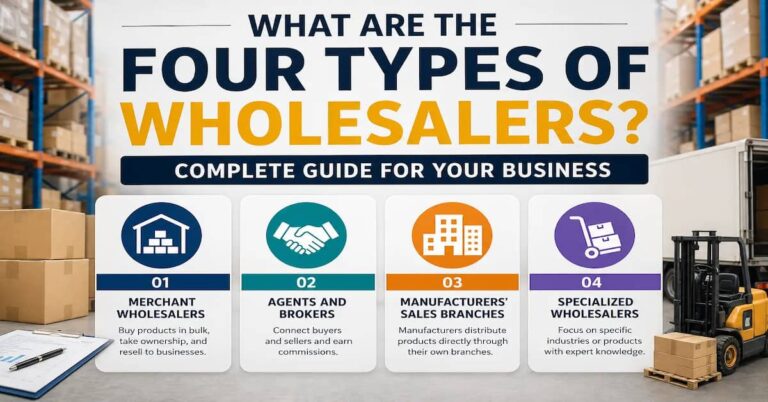
The four main types of wholesalers are merchant wholesalers, agents and brokers, manufacturers’ sales branches, and specialized wholesalers. Each type handles different parts of the distribution process and offers varying levels of service to retailers and other businesses.
Merchant Wholesalers
Merchant wholesalers buy products in bulk from manufacturers and resell them to retailers or other businesses. They take ownership of the goods they sell. That means they handle storage, assume risk, and manage inventory.
These wholesalers fall into two categories:
- Full-service wholesalers provide complete support including warehousing, delivery, credit terms, and product information
- Limited-service wholesalers offer fewer services but typically charge lower prices
Many US wholesale distributors operate as merchant wholesalers. They’re common in industries like food, clothing, and electronics.
Agents and Brokers
Agents and brokers never own the products they sell. Instead, they connect buyers with sellers and earn commissions on completed transactions.
Agents typically work for one company long-term. They represent that company’s interests in specific territories or markets. Brokers bring buyers and sellers together for individual transactions. They don’t maintain ongoing relationships with either party.
Real estate and insurance industries rely heavily on agents and brokers. They’re also common in agricultural markets and imported goods.
Manufacturers’ Sales Branches
Some manufacturers skip independent wholesalers entirely. They set up their own sales offices and warehouses to distribute products directly to retailers.
These operations are called manufacturers’ sales branches. The manufacturer maintains full control over inventory, pricing, and distribution. This approach works best for companies with high-volume products or specialized equipment that needs expert sales support.
Companies like Apple and automotive manufacturers often use this model. It gives them direct relationships with retailers and better market control.
Specialized Wholesalers
Specialized wholesalers focus on specific industries or product categories. They develop deep expertise in their niche markets.
Drop shippers never handle products physically. When they receive an order, they pass it to the manufacturer who ships directly to the customer. Cash-and-carry wholesalers run warehouse-style operations where small businesses buy products on the spot.
Truck jobbers deliver perishable goods like bread or milk directly to retail stores. Rack jobbers set up and maintain product displays in retail locations.
If you need Amazon FBA suppliers, you’ll likely work with specialized wholesalers who understand e-commerce fulfillment.
How Do Full-Service and Limited-Service Wholesalers Differ?
Full-service wholesalers provide complete distribution support including storage, delivery, financing, and market information, while limited-service wholesalers offer fewer services at lower costs. Your choice depends on your business capabilities and support needs.
| Service Type | Full-Service | Limited-Service |
| Warehousing | Yes | Varies |
| Delivery | Yes | Often customer picks up |
| Credit Terms | Yes | Usually cash only |
| Sales Support | Yes | Minimal |
| Price Level | Higher | Lower |
Full-service wholesalers work well for new businesses that need support. They handle logistics so you can focus on sales. Limited-service wholesalers suit established businesses with their own delivery trucks and storage space.
Which Type of Wholesaler Should Your Business Use?
Choose merchant wholesalers if you need inventory support, agents if you want low overhead, manufacturers’ branches for direct relationships, or specialized wholesalers for niche products. The right choice depends on your industry, volume, and operational capabilities.
Consider these factors:
- Product type and handling requirements
- Your storage and distribution capabilities
- Order volume and frequency
- Available working capital
- Level of support needed
Small retailers often start with full-service merchant wholesalers. As they grow, they might switch to limited-service options to cut costs. Online sellers frequently use drop shippers to avoid inventory management.
Pro Tip: Contact multiple wholesaler types in your industry. Compare their minimum orders, payment terms, and delivery schedules before committing.
What Industries Use Different Wholesaler Types?
Different industries favor specific wholesaler models based on product characteristics and market structure.
Fashion and apparel businesses typically work with merchant wholesalers. These clothing wholesalers maintain seasonal inventory and handle frequent style changes.
Automotive parts distribution relies on both merchant wholesalers and manufacturers’ branches. Automotive parts distributors need technical expertise and fast delivery for repair shops.
Food service uses truck jobbers who deliver fresh products daily. Construction materials often go through limited-service wholesalers where contractors pick up supplies themselves.
Frequently Asked Questions
Do wholesalers only sell to businesses?
Yes, most wholesalers require a business license or tax ID to purchase from them. They sell in bulk quantities that make sense for resale, not individual consumer use.
Can I buy from multiple wholesaler types?
Absolutely. Many businesses work with different wholesaler types for different product categories. You might use a merchant wholesaler for core inventory and drop shippers for specialty items.
What’s the minimum order from most wholesalers?
Minimum orders vary widely by industry and wholesaler type, so ask each wholesaler for its minimums before you apply. Full-service wholesalers typically have lower minimums than limited-service ones.
How do wholesaler prices compare to retail?
Wholesale prices are below retail prices, and the gap varies by industry and product. Your profit margin depends on the markup your market will bear and your operating costs.
Do I need a warehouse to work with wholesalers?
Not always. Full-service wholesalers store inventory for you and deliver as needed. Drop shippers handle products without you touching them. But limited-service wholesalers usually require you to have storage space.
What payment terms do wholesalers offer?
Full-service merchant wholesalers often provide net-30 or net-60 terms after you establish credit. Agents and brokers facilitate payments between parties. Limited-service wholesalers typically require cash or credit card payment at pickup.
Can small businesses compete buying from the same wholesalers as large retailers?
Yes, but larger buyers often get volume discounts. Small businesses can compete through better customer service, niche selection, or local market knowledge rather than just price.